
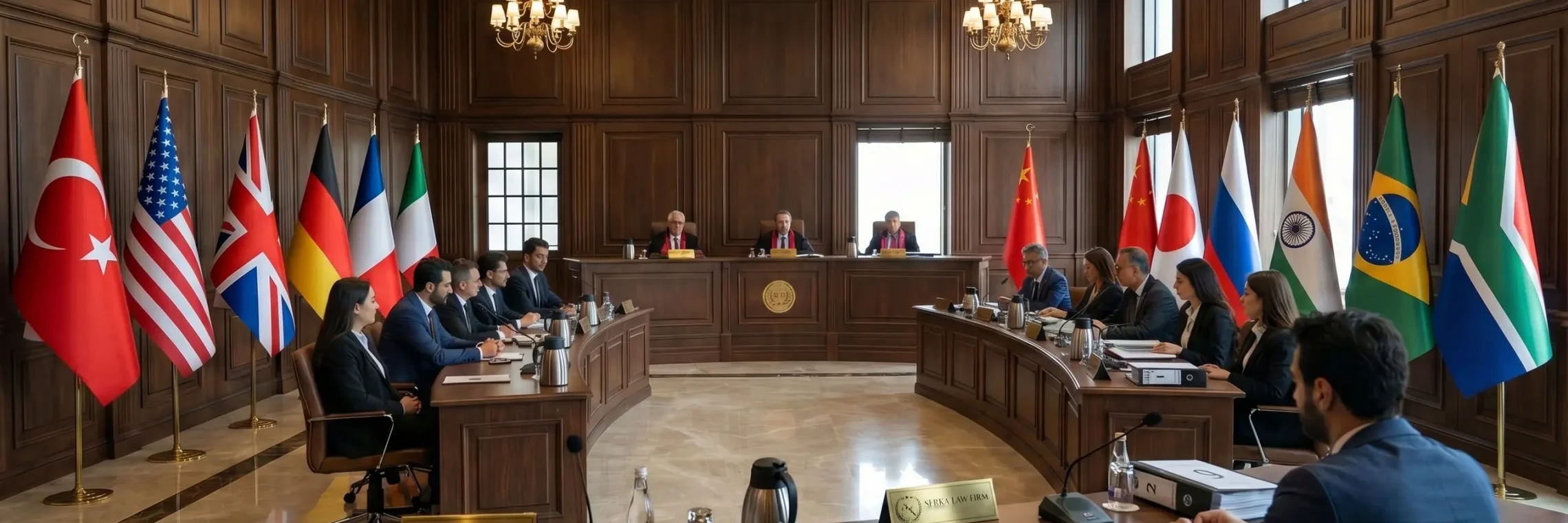
A defective arbitration clause is unenforceable or open to jurisdictional challenge: under Turkish law an arbitration agreement must, per the Code of Civil Procedure No. 6100 and the International Arbitration Law No. 4686, clearly express the parties’ intent to arbitrate, name a workable seat, and define the scope of disputes, or it risks being treated as void, pathological, or merely optional. The five errors that most often wreck cross-border clauses are an unnamed or wrongly named institution, confused seat and governing-law wording, optional language that does not bind, scope that is too narrow, and a clause copied from an unrelated deal.
What makes an arbitration clause defective under Turkish law?
A clause is defective when it fails the validity test in the International Arbitration Law No. 4686 or, for domestic-seated matters, the Code of Civil Procedure No. 6100: the agreement must be in writing, show a clear and unconditional intent to arbitrate, and be capable of being performed. Clauses that say a dispute “may” be arbitrated, that name a non-existent institution, or that point to two forums at once are routinely challenged as pathological. Turkish courts and arbitral tribunals read the wording strictly, so ambiguity that the drafters intended as flexibility usually becomes the counterparty’s leverage.
The five drafting mistakes that create expensive disputes
Most clause failures trace to one of five recurring errors. Each is cheap to fix before signature and expensive to litigate afterwards, because the threshold fight over the clause delays the merits and multiplies cost.
- Unnamed or misnamed institution. Referring to “the international arbitration court” or an entity that does not exist leaves no rules and no appointing authority. Name the real institution precisely, for example the ICC International Court of Arbitration or the Istanbul Arbitration Centre (ISTAC), or designate UNCITRAL Rules with a named appointing authority for ad hoc proceedings.
- Confused seat and governing law. The legal seat fixes the procedural law and the supervising courts; the governing law decides the merits. Blurring them invites a jurisdiction fight, addressed separately below.
- Optional or permissive wording. “May refer to arbitration” or a clause that also preserves court litigation can be read as non-binding. Use mandatory language that commits both sides to arbitrate.
- Scope too narrow. Limiting arbitration to “disputes about payment” can push tort, validity, or termination claims into national courts, splitting one commercial relationship across two forums.
- Copied clause that does not fit. A clause that worked in a prior transaction may misalign with the present parties, currency, language, and enforcement target. Reusing it without testing it against the live deal is the most common and most avoidable error.
Why does seat versus governing law cause the most trouble?
The seat and the governing law are different decisions, and conflating them is the single most damaging clause error in cross-border contracts. Under the International Arbitration Law No. 4686, the seat determines the procedural framework, the courts that supervise and may set aside the award, and the nationality of the award for enforcement under the New York Convention. The governing law named under the Code of Obligations No. 6098 and the Private International Law and Procedure Act No. 5718 governs the substance of the contract. A clause that says the contract is “subject to Swiss law and arbitrated under ICC rules” without fixing a seat leaves the procedural anchor undefined. Decide and write both. We cover the distinction in depth in our guide to seat versus governing law confusion in arbitration clauses.
Which institution should the clause name: ICC or ISTAC?
The choice between the ICC International Court of Arbitration and the Istanbul Arbitration Centre (ISTAC) depends on the seat, the enforcement target, and cost tolerance, and the clause must name one institution and use its model wording. Both administer proceedings whose awards are enforceable in Turkey and abroad under the New York Convention, which Turkey applies through the International Arbitration Law No. 4686. The table below frames the trade-off; the institution-specific comparison is fully developed in our ICC versus ISTAC analysis for Turkey-linked contracts.
| Factor | ICC International Court of Arbitration | Istanbul Arbitration Centre (ISTAC) |
|---|---|---|
| Profile | Global institution, deep cross-border case law and scrutiny of awards | Turkey-seated institution, local familiarity and Turkish-court alignment |
| Typical seat fit | Neutral foreign or Turkish seat for large international deals | Istanbul seat for Turkey-centred or regional transactions |
| Cost structure | Administrative and arbitrator fees set by the institution’s scale in force at the time of filing | Fee scale set by the institution and generally lower for comparable amounts; confirm the rate in force |
| Model clause | Use the ICC model arbitration clause verbatim, then add seat and language | Use the ISTAC model clause, then add seat and language |
Whichever you choose, paste the institution’s official model clause first and customise only the seat, language, and number of arbitrators. Confirm any fee or scale figure with the institution at the time of filing, as published rates change.
What does a clean arbitration clause have to contain?
A workable clause names six elements, each closing a gap that the International Arbitration Law No. 4686 and institutional rules would otherwise leave open to challenge. Drafting these in writing, in mandatory terms, is what keeps the clause alive once the parties stop cooperating.
- the named arbitral institution and its rules, or a clearly structured ad hoc framework under UNCITRAL Rules
- the legal seat or place of arbitration, which fixes the supervising courts and the award’s nationality
- the governing law of the contract, kept distinct from the seat
- the scope of disputes, drafted broadly to capture all claims arising out of or in connection with the contract
- the number of arbitrators and the appointment mechanism
- the language of the arbitration, especially where the contract exists in two translated versions
How does cross-border enforcement change the drafting?
Enforcement is the test the clause must survive, and it is decided long after signature under the New York Convention. Turkey enforces foreign arbitral awards through that Convention and the International Arbitration Law No. 4686, and an award is refused enforcement only on the narrow grounds set out in the Convention, including an invalid arbitration agreement and awards that exceed the scope of the submission. That makes the seat, the institution, and the scope wording not abstract drafting choices but the exact points a resisting party will attack at the enforcement stage. Draft the clause backwards from where you expect to enforce. The guide to enforcing foreign arbitral awards in Turkey under the New York Convention sets out the procedure and the refusal grounds in detail.
Documents to review before drafting or challenging a clause
Whether you are tightening an unsigned clause or defending a live one, the same file builds the picture. Assemble these before forming a view, because the clause is only as strong as its fit with the surrounding contract.
- the draft or signed arbitration clause and the dispute-resolution wording around it
- the main contract, including any choice-of-law and jurisdiction provisions that may conflict
- negotiation drafts and side correspondence showing the parties’ forum intent
- the rules of any institution referenced, in the version current at signature
- both language versions where the contract is bilingual, to test for divergence
- any fact pattern showing how the current wording could be challenged or exploited
Can a weak clause still be used strategically?
Sometimes yes, but only after the vulnerabilities are mapped rather than assumed away. A defective clause is not automatically dead; depending on the wording it may still support a tribunal’s jurisdiction, a stay of court proceedings, or an enforcement application. The strategic question is whether the ambiguity favours your position or the counterparty’s, and that turns on the specific text read against the International Arbitration Law No. 4686 and the relevant institutional rules. If the contract is still negotiable, the better course is to fix the clause before signature; if the dispute is already live, the task is to map what the clause supports and where it is exposed.
Frequently asked questions
Is a short arbitration clause worse than a long one?
No. A short clause can be excellent if it is precise and fits the transaction. What matters is that it names the institution and rules, fixes the seat, keeps governing law distinct, and defines scope broadly. Length adds nothing if those elements are present, and a long clause that buries a contradiction is worse than a tight one that does not.
Do clause problems only matter once a dispute starts?
No. The right time to fix a clause is before signature, while both parties still control the drafting. Once a dispute is live, the wording is fixed and every weakness becomes contested ground. Under the International Arbitration Law No. 4686 a defective clause can be challenged at the jurisdiction stage and again at enforcement, so early correction is far cheaper.
Does naming Turkish law mean the seat is in Turkey?
No, and assuming so is a classic error. Governing law and seat are separate. A contract can be governed by Turkish law under the Code of Obligations No. 6098 while seated abroad, or governed by foreign law with its seat in Istanbul under ISTAC. The Private International Law and Procedure Act No. 5718 governs the choice-of-law analysis; the seat is a distinct procedural decision that must be stated expressly.
Will a Turkish court enforce a foreign arbitral award if the clause is imperfect?
Possibly, but the clause is exactly where the resisting party will attack. Turkey enforces foreign awards under the New York Convention, which permits refusal where the arbitration agreement is invalid or the award exceeds the submission. A clause with a clear seat, a named institution, and broad scope removes those openings; a vague one hands the other side grounds to resist. Have the clause reviewed against the enforcement target before signing.
Fix the clause before it costs you the dispute
If your contract is still negotiable, the cheapest insurance is a clause review before signature; if the dispute is already live, the priority is mapping what the clause still supports. Our team advises foreign investors, general counsel, and cross-border companies on clause drafting, seat and institution selection, and enforcement strategy. Where the contract itself needs work, our international commercial litigation team can pressure-test the surrounding terms.
General information, not legal advice. Turkish law; verify your specific situation with qualified counsel.