
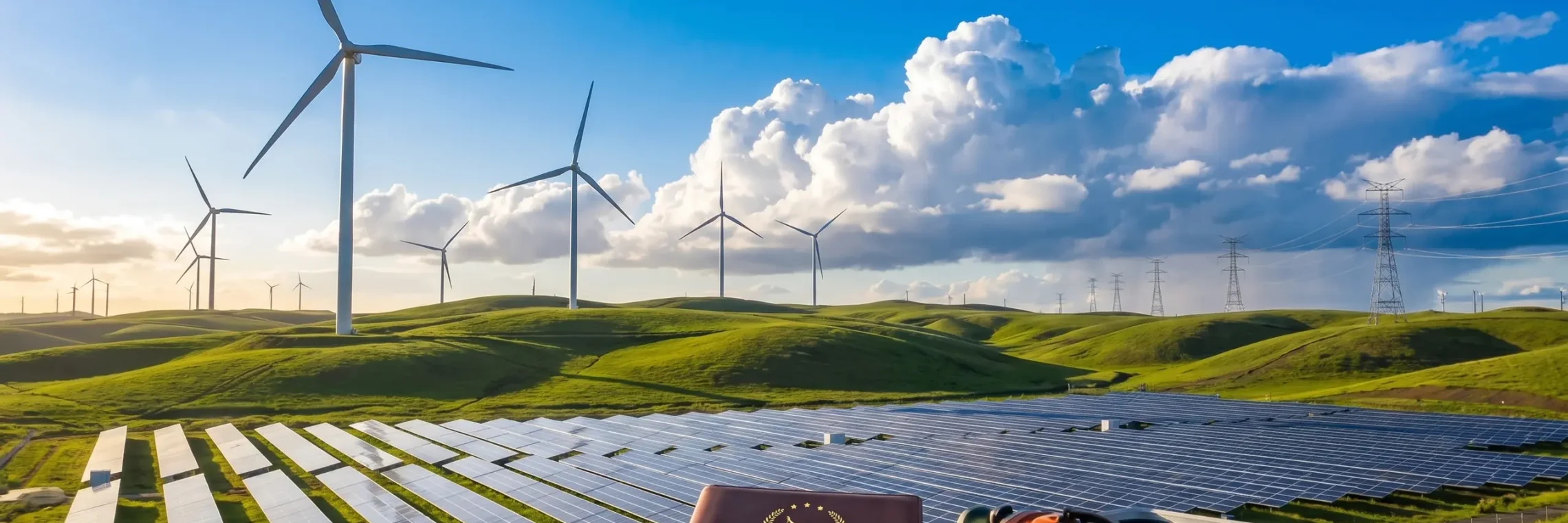
Energy law governs the legal framework for energy production, distribution, trading, and consumption across conventional and renewable sources. It encompasses licensing and regulatory compliance, power purchase agreements, environmental obligations, foreign investment structures, and dispute resolution in the energy sector. Serka Law Firm provides legal counsel to energy companies, investors, and project developers navigating complex regulatory environments across international markets.
What Is Energy Law and Why Does It Matter?
Energy law is a specialized branch of law that regulates the exploration, extraction, generation, transmission, distribution, trading, and consumption of energy resources. It intersects with administrative law, environmental law, competition law, contract law, investment law, and international trade law, making it one of the most multidisciplinary areas of legal practice. Energy law matters because energy infrastructure underpins every sector of the economy, and the legal frameworks governing this sector directly affect investment decisions, operational viability, and long-term project returns.
The global energy landscape is undergoing a fundamental transformation driven by climate commitments, technological innovation, and shifting regulatory priorities. Renewable energy sources (including solar, wind, hydroelectric, geothermal, and biomass) are attracting unprecedented levels of investment, while conventional energy markets in oil, natural gas, and nuclear power continue to evolve under increasingly sophisticated regulatory regimes. Navigating this environment requires legal counsel that understands both the technical characteristics of energy projects and the regulatory frameworks that govern them.
How Does Energy Regulation Work Across Different Markets?
Energy markets are typically regulated by specialized government agencies or independent regulatory authorities that oversee licensing, pricing, grid access, market competition, and consumer protection. The regulatory approach varies significantly between jurisdictions, ranging from fully liberalized markets where private companies compete freely to state-controlled systems where government entities maintain monopoly positions over key infrastructure.
In liberalized energy markets, regulatory bodies grant licenses for generation, transmission, distribution, and supply activities. These licenses carry detailed obligations regarding capacity, quality of service, environmental compliance, and reporting requirements. Market participants must also comply with competition rules that prevent abuse of dominant positions, market manipulation, and anti-competitive agreements.
Cross-border energy trade adds further regulatory complexity, involving bilateral and multilateral agreements, interconnection rules, customs and tariff regulations, and international standards for grid compatibility and safety. Energy companies operating across multiple jurisdictions must manage a mosaic of regulatory obligations that may conflict or overlap.
What Are the Key Legal Areas Within Energy Law?
| Area | Scope | Key Legal Instruments | Common Issues |
|---|---|---|---|
| Licensing and Permits | Authorization to explore, generate, transmit, or distribute energy | Generation licenses, exploration permits, environmental impact assessments | Regulatory compliance, license conditions, renewal procedures |
| Power Purchase Agreements (PPAs) | Long-term contracts for electricity sale between generator and off-taker | PPAs, virtual PPAs, corporate PPAs | Pricing mechanisms, curtailment risk, credit support, force majeure |
| Renewable Energy | Solar, wind, hydro, geothermal, biomass project development | Feed-in tariffs, auction mechanisms, renewable energy certificates | Incentive program eligibility, grid connection, land rights |
| Oil and Gas | Upstream exploration, midstream transport, downstream refining and distribution | Production sharing agreements, concession agreements, joint operating agreements | Host government relations, revenue sharing, decommissioning |
| Nuclear Energy | Nuclear power plant construction, operation, and decommissioning | Nuclear liability conventions, construction agreements, fuel supply contracts | Safety regulation, waste management, third-party liability |
| Energy Trading | Wholesale and retail energy market transactions | EFET master agreements, ISDA derivatives documentation | Market manipulation, position limits, reporting obligations |
| Environmental Compliance | Environmental obligations of energy operations | Environmental impact assessments, emissions trading schemes, carbon credits | Emission reduction targets, biodiversity protection, remediation |
What Are Power Purchase Agreements and Why Are They Critical?
Power purchase agreements (PPAs) are the contractual foundation of most energy projects, particularly in the renewable energy sector. A PPA is a long-term contract between an electricity generator and a purchaser (off-taker) that establishes the terms for the sale of electrical energy over a defined period, typically ranging from ten to twenty-five years.
PPAs are critical because they provide the revenue certainty that enables project financing. Lenders and investors assess the creditworthiness of the off-taker, the pricing mechanism, and the contractual risk allocation when deciding whether to fund an energy project. A well-structured PPA reduces financing costs, attracts investment, and provides both parties with long-term price stability.
Key legal issues in PPA negotiation include pricing structure (fixed, indexed, or hybrid), delivery point and metering arrangements, curtailment and dispatch risk allocation, change-in-law provisions, force majeure definitions, termination events and consequences, credit support requirements (guarantees, letters of credit), and dispute resolution mechanisms.
Corporate PPAs, where commercial or industrial consumers contract directly with generators, have become increasingly common as companies pursue renewable energy procurement to meet sustainability targets and reduce energy costs. Virtual PPAs, which are financial instruments rather than physical delivery contracts, enable companies to support renewable energy development without direct grid connection to the generating facility.
What Legal Considerations Apply to Renewable Energy Projects?
Renewable energy project development involves a distinctive set of legal considerations that span the project lifecycle from site selection through construction, operation, and eventual decommissioning.
Land rights and permitting: Securing appropriate land rights (whether through purchase, lease, easement, or government concession) is the first critical legal step. Permitting requirements vary by project type and jurisdiction but typically include environmental impact assessments, construction permits, grid connection agreements, and community consultation processes.
Incentive programs: Many jurisdictions offer incentives for renewable energy development including feed-in tariffs, premium payments, tax credits, accelerated depreciation, and auction-based pricing mechanisms. Legal counsel must assess eligibility requirements, compliance obligations, and the long-term stability of incentive programs, since regulatory changes can significantly affect project economics.
Grid connection: Connecting a renewable energy facility to the electrical grid requires a grid connection agreement with the relevant transmission or distribution system operator. Connection costs, capacity allocation, curtailment risk, and technical requirements are all subject to negotiation and regulatory oversight.
Project finance: Renewable energy projects are typically financed on a limited or non-recourse basis, meaning lenders rely on the project’s cash flows rather than the sponsor’s balance sheet for repayment. Legal documentation for project finance includes loan agreements, security packages over project assets and contracts, intercreditor agreements, and direct agreements between lenders and key project counterparties.
How Does Energy Law Intersect with Environmental and Investment Regulations?
Energy law operates at the intersection of environmental protection and investment promotion, two policy objectives that can create both synergies and tensions. Environmental regulations impose obligations on energy producers regarding emissions, waste management, biodiversity protection, and land remediation, while investment regulations create the legal framework for attracting private capital to the energy sector.
Emissions trading schemes (cap-and-trade systems) and carbon pricing mechanisms are increasingly central to energy law. These instruments create financial incentives for reducing greenhouse gas emissions by assigning a price to carbon. Energy companies must understand their compliance obligations under these schemes and may need to incorporate carbon costs into project economic models.
Foreign investment in energy infrastructure is subject to screening and approval processes in many jurisdictions, particularly for projects involving critical infrastructure, strategic resources, or national security considerations. Investment treaties and bilateral investment agreements provide protections for foreign investors, including fair and equitable treatment, protection against expropriation, and access to international arbitration for investment disputes.
Environmental, social, and governance (ESG) considerations are becoming material legal obligations rather than voluntary commitments. Energy companies face increasing disclosure requirements regarding climate risk, environmental performance, and social impact, and legal counsel must ensure compliance with evolving ESG reporting frameworks across jurisdictions.
What Are the Emerging Trends in Global Energy Law?
The energy sector is experiencing rapid legal and regulatory evolution driven by decarbonization commitments, technological disruption, and geopolitical shifts. Several emerging trends are reshaping energy law practice globally:
Energy storage regulation: Battery storage systems and other storage technologies are creating new regulatory categories that existing energy frameworks were not designed to address. Jurisdictions are developing specific licensing, grid access, and market participation rules for energy storage assets, creating both opportunities and compliance challenges.
Hydrogen economy: Green hydrogen, produced through electrolysis using renewable energy, is attracting significant investment and regulatory attention. Legal frameworks for hydrogen production, transport, storage, and use are being established in multiple jurisdictions, including certification schemes for guarantees of origin and safety regulations for hydrogen infrastructure.
Carbon capture, utilization, and storage (CCUS): CCUS technologies are gaining regulatory support as a component of net-zero strategies. Legal issues include liability frameworks for stored carbon dioxide, permitting processes for capture and injection facilities, and the interface between CCUS and emissions trading schemes.
Energy transition financing: Green bonds, sustainability-linked loans, and transition finance instruments are creating new legal documentation requirements. Energy companies and their counsel must navigate evolving taxonomies, disclosure obligations, and anti-greenwashing regulations to access transition capital markets.
What Are Common Disputes in the Energy Sector?
Energy disputes tend to be high-value, technically complex, and often international in character. Common categories include PPA disputes over pricing adjustments, curtailment allocation, or force majeure claims; regulatory disputes challenging licensing decisions, tariff determinations, or environmental compliance orders; construction disputes involving delay claims, variation orders, and performance guarantees; joint venture and partnership disputes between co-investors in energy projects; and investor-state disputes where foreign investors challenge government actions that adversely affect their energy investments.
International arbitration is the preferred dispute resolution mechanism for cross-border energy transactions, offering procedural flexibility, confidentiality, access to arbitrators with sector-specific expertise, and international enforceability of awards. Institutional arbitration under rules administered by the ICC, LCIA, ICSID, or other institutions is standard in energy contracts.
How Can Serka Law Firm Help with Energy Law Matters?
Serka Law Firm provides comprehensive legal services to energy sector participants including project developers, investors, lenders, government entities, and energy consumers. Our energy law practice covers the full range of legal needs arising across conventional and renewable energy projects.
Our energy law services include drafting and negotiating power purchase agreements, concession agreements, and joint operating agreements; advising on regulatory licensing and compliance requirements; structuring foreign investment in energy infrastructure; conducting legal due diligence for energy project acquisitions and financings; advising on environmental compliance, emissions trading, and ESG reporting obligations; representing clients in energy disputes through arbitration and litigation; and providing ongoing regulatory advisory for energy market participants.
We combine deep understanding of energy regulatory frameworks with practical commercial perspective, ensuring that legal advice supports investment decisions and project development objectives. Our cross-border capability enables us to coordinate advice across multiple jurisdictions for clients with international energy portfolios.
Frequently Asked Questions About Energy Law
Q: What licenses are required for energy generation?
A: The specific licenses depend on the jurisdiction, energy source, and project capacity. Generally, energy generation requires a generation license from the relevant energy regulatory authority, environmental permits including an environmental impact assessment, construction and building permits, a grid connection agreement with the system operator, and in some jurisdictions a separate license for electricity trading or supply. Small-scale projects, particularly in renewable energy, may qualify for license exemptions or simplified procedures below specified capacity thresholds.
Q: What is the difference between a PPA and a virtual PPA?
A: A traditional PPA involves physical delivery of electricity from the generator to the off-taker, with the off-taker consuming the electricity directly. A virtual PPA (or synthetic PPA) is a financial contract, typically structured as a contract for difference, where the parties settle the difference between a fixed strike price and the market price without physical delivery. Virtual PPAs allow corporate buyers to support renewable energy development and claim renewable energy certificates without being physically connected to the generating facility.
Q: How are energy disputes typically resolved?
A: Energy disputes are commonly resolved through international arbitration, particularly for cross-border transactions and investor-state disputes. Arbitration offers confidentiality, procedural flexibility, access to technically qualified arbitrators, and international enforceability of awards under the New York Convention. Domestic disputes may also be resolved through local courts, regulatory proceedings, or expert determination for technical matters. Many energy contracts include multi-tier dispute resolution clauses that require negotiation and mediation before arbitration.
Q: What are the main legal risks for foreign investors in the energy sector?
A: Key legal risks include regulatory changes that affect project economics (such as changes to incentive programs or tariff structures), political risk including expropriation or discriminatory treatment, contractual risks in PPAs and government concession agreements, environmental liability and compliance costs, currency risk and exchange controls, and grid access or curtailment risks. Structuring investments through bilateral investment treaties and including stabilization provisions in government contracts can mitigate some of these risks.
Q: What is an environmental impact assessment and when is it required?
A: An environmental impact assessment (EIA) is a systematic evaluation of the potential environmental effects of a proposed project, including effects on air quality, water resources, biodiversity, soil, noise levels, and community well-being. EIAs are required for most significant energy projects and must be submitted to the relevant environmental authority for approval before construction begins. The EIA process typically includes baseline studies, impact identification and assessment, mitigation measures, stakeholder consultation, and ongoing monitoring requirements.
Q: How do green bonds differ from conventional bonds for energy projects?
A: Green bonds are debt instruments where the proceeds are earmarked exclusively for projects with environmental benefits, such as renewable energy installations or energy efficiency improvements. Unlike conventional bonds, green bonds require additional documentation including a green bond framework, second-party opinion or certification, and ongoing reporting on the use of proceeds and environmental impact. The International Capital Market Association (ICMA) Green Bond Principles provide the widely accepted voluntary standard for issuance.
Related Legal Services
- Corporate and Commercial Law: Corporate structuring for energy investments
- International Arbitration: Energy dispute resolution
- International Commercial Litigation: Cross-border energy disputes
- Tax Law and Customs Regulations: Tax structuring for energy projects
- Real Estate Law: Land rights for energy project development
- Establishing Companies: SPV formation for energy projects
- Nuclear Energy Law: Specialized nuclear regulatory counsel
- Foreign Direct Investment: Cross-border energy investment advisory
- Privatization and Public Procurement: tender routes for energy projects