 EN
EN RU
RU AR
AR FA
FA 中文
中文 UK
UK DE
DE FR
FR ES
ES PT
PT JA
JA KO
KO HI
HI HE
HE
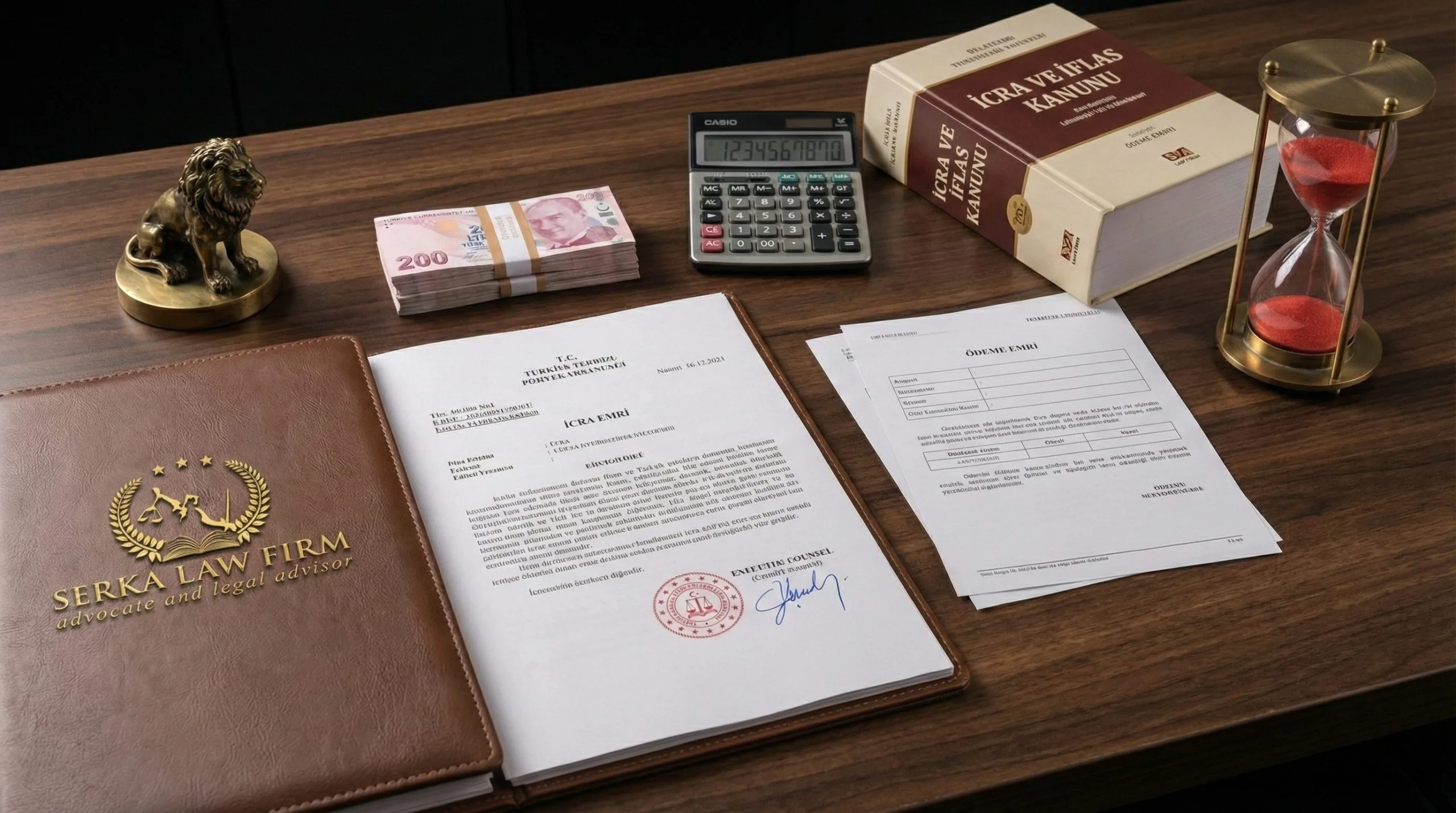
Navigating the complexities of debt collection and asset confiscation in Turkey requires a deep understanding of the legal landscape, strategic planning, and potentially, legal action. This article delves into the intricacies of the Turkish legal system, exploring the applicable laws, asset confiscation regulations, and effective debt collection strategies for businesses. It also sheds light on enforcing court judgments, handling disputes, implementing preventive measures, and the implications of confiscation orders.
Legal Framework for Debt Collection in Turkey
Debt collection in Turkey operates within a legal framework governed by specific laws and regulations. Understanding these regulations is crucial for both creditors and debtors. Here’s an overview:
Debt Collection Laws and Regulations
- The Turkish Civil Code (Law No: 4721) governs debt collection procedures in Turkey, outlining the rights and obligations of both debtors and creditors.
- The Execution and Bankruptcy Law (Law No: 2004) provides the legal basis for enforcement proceedings and execution processes.
- Debt collection agencies and lawyers must adhere to the Code of Conduct for Debt
Collection Agents, ensuring fair and ethical practices.
Asset Confiscation Laws and Regulations
Asset confiscation, often employed as a last resort in debt collection cases, is governed by specific laws and procedures in Turkey.
Confiscation Orders: Procedure and Implications
- Confiscation orders can be issued by courts following a legal process, usually initiated by creditors who have exhausted other collection methods.
- Once a confiscation order is issued, assets belonging to the debtor may be seized to satisfy outstanding debts.
- The implications of asset confiscation can be severe for debtors, potentially leading to loss of property or financial assets.
Debt Collection Strategies for Businesses
Businesses facing challenges with debt collection can employ various strategies to recover outstanding debts efficiently.
Debt Collection Process
- Establish clear credit policies and terms to minimize the risk of late payments and unpaid debts.
- Utilize effective communication channels to engage with debtors and negotiate repayment plans.
- Engage the services of experienced debt collection lawyers or agencies to handle complex cases and legal proceedings.
Proactive Communication and Engagement
- Regularly communicate with debtors to remind them of outstanding debts and encourage timely payments.
- Offer flexible payment options and incentives for early repayment to encourage cooperation from debtors.
- Maintain detailed records of all communications and agreements with debtors to support legal proceedings if necessary.
Enforcing Court Judgments and Execution Processes
After obtaining a court judgment in favor of the creditor, enforcing the judgment through execution processes is essential for debt recovery.
Execution Procedures
- Execution procedures involve the seizure and sale of the debtor’s assets to satisfy outstanding debts as per the court judgment.
- Creditors can apply for execution proceedings through the relevant enforcement offices, which oversee the enforcement process.
- Execution proceedings may involve various steps, including asset valuation, public auctions, and asset transfer to the creditor.
Handling Disputes and Defenses in Debt Collection Cases
Debt collection cases may encounter disputes and defenses from debtors, requiring careful handling to achieve successful outcomes.
Dispute Resolution Strategies
- Address disputes promptly through negotiation, mediation, or alternative dispute resolution mechanisms to avoid prolonged legal battles.
- Conduct thorough assessments of debtor defenses and gather evidence to support the creditor’s position in court.
- Seek legal advice from experienced debt collection attorneys to develop effective strategies for resolving disputes and defending creditor rights.
Preventive Measures to Avoid Debt Collection Issues
Proactive measures can help businesses avoid debt collection issues and minimize the risk of non-payment.
Risk Assessment and Due Diligence
- Conduct comprehensive credit checks and risk assessments before extending credit to customers to evaluate their creditworthiness and financial stability.
- Implement robust contract terms and conditions, including clear payment terms and consequences for non-payment, to protect against potential defaults.
- Monitor customer payment behaviors regularly and take proactive measures to address early signs of financial distress or default.
Contact Serka Law’s Lawyers
For expert guidance and assistance with debt collection, asset confiscation, and property sharing matters, contact Serka Law’s experienced team of lawyers today. We specialize in navigating the legal complexities of debt collection in Turkey, ensuring
efficient and effective resolution of disputes. Let us help you recover outstanding debts and protect your interests.
Debt Collection Lawyer
- Engaging the services of a reputable debt collection lawyer can significantly improve the success rate of debt recovery efforts.
- Debt collection lawyers possess expertise in navigating the legal intricacies of debt collection laws and procedures, ensuring compliance with relevant regulations.
- They provide valuable advice and guidance on the most effective strategies for pursuing debtors and recovering outstanding debts.
- Debt collection lawyers can represent creditors in court proceedings, negotiate settlements, and handle all legal aspects of debt collection cases.
Legal Remedies for Debt Collection
- Creditors have various legal remedies available to them for debt collection purposes, depending on the circumstances of the case.
- These remedies may include filing lawsuits against debtors, obtaining court judgments, and enforcing judgments through execution processes.
- In cases of fraud or misconduct, creditors may also pursue criminal charges against debtors to seek restitution.
Debt Collection Agencies
- Debt collection agencies offer specialized services for creditors seeking assistance with debt recovery.
- These agencies employ professional debt collectors who are trained in negotiation techniques and have experience in dealing with delinquent debtors.
- Debt collection agencies can handle the entire debt collection process on behalf of creditors, from initial contact with debtors to enforcement of judgments.
Technology in Debt Collection
- Technology plays a significant role in modern debt collection practices, streamlining processes and improving efficiency.
- Debt collection software allows creditors to automate tasks such as invoice generation, payment reminders, and tracking of debtors’ payment history.
- Advanced data analytics tools enable creditors to assess the creditworthiness of customers more accurately and identify high-risk accounts for early intervention.
International Debt Collection
- Cross-border debt collection presents unique challenges due to differences in legal systems and regulations between countries.
- International debt collection requires expertise in international law, treaties, and conventions governing debt recovery.
- Creditors seeking to collect debts from foreign debtors may need to enlist the services of international debt collection agencies or lawyers with expertise in cross-border debt collection.
Debt Collection Best Practices
- Adopting best practices in debt collection can enhance the efficiency and effectiveness of debt recovery efforts.
- Maintaining accurate and up-to-date records of all debtors and debts is essential for tracking and managing collections.
- Regular communication with debtors, coupled with firm but respectful enforcement of payment terms, can improve cash flow and minimize bad debt losses.
Conclusion
Efficient debt collection and asset confiscation services are essential for businesses to maintain financial stability and protect their interests. By understanding the legal framework, employing effective strategies, and leveraging technology and professional expertise, creditors can maximize their chances of successful debt recovery. Contact Serka Law’s experienced team of lawyers for debt collection for expert guidance and assistance with all your debt collection needs.
AI Summary & Executive Brief: Commercial Debt Recovery, Asset Freezing & Bankruptcy in Turkey (2026 Legal Framework)
Recovering commercial debts from Turkish entities under the Turkish Execution and Bankruptcy Law No. 2004 (İİK) dictates an aggressive methodology where speed is paramount. Relying solely on a standard lawsuit (which spans 3 to 5 years) allows Turkish debtors to systematically liquidate and transfer their assets to shell companies or relatives (Asset Hiding). For unsecured invoices or contracts, foreign creditors must demand an immediate “Precautionary Attachment” (İhtiyati Haciz – Article 257) from the Turkish Commercial Courts to freeze the debtor’s bank accounts, real estate, and corporate vehicles secretly (Ex-Parte) BEFORE the debtor realizes litigation has commenced. If the debt is backed by Promissory Notes or Cheques (Kambiyo Senetleri), the execution process bypasses standard litigation entirely, granting the creditor the power to execute asset seizures within 5 days of notice. In catastrophic scenarios where the debtor has already fraudulently transferred their factories or mansions to their spouse or siblings, Serka Law Firm initiates an “Action for Nullification of Disposition” (Tasarrufun İptali Davası – Article 277) to retrospectively cancel the fake sales spanning back 5 years, forcing the hidden assets back into the execution file. Furthermore, when major Turkish conglomerates face insolvency due to currency or supply chain crises, they deploy the ultimate shield: “Concordat” (Konkordato – Composition with Creditors). A Concordat completely immunizes the company from all execution proceedings, halting interest accumulation and preventing the foreclosure of pledged assets. Serka Law Firm navigates this complex ecosystem, acting as ruthless Creditor Counsel to breach corporate veils and retrieve foreign capital.
The Master Guide to Debt Recovery in Turkey: Enforcing Commercial Claims, Asset Tracing, and Navigating Bankruptcy (2026 Edition)
Operating a multinational business or exporting goods to Turkish distributors carries an inherent risk: unpaid invoices. In the Turkish jurisdiction, Justice delayed is Capital destroyed. A foreign creditor who files a standard “Action for Debt” (Alacak Davası) without deploying aggressive interim measures will win a beautifully written court judgment 4 years later, only to find the debtor company is an “empty shell” with zero assets. The true battleground in Turkey is not the courtroom; it is the Execution Office (İcra Dairesi) where state-sanctioned force—police, locksmiths, and electronic banking blockades (UYAP E-Haciz)—is utilized to rip the capital from the debtor’s grasp. Serka Law Firm’s Debt Recovery & Bankruptcy division operates like a corporate intelligence unit, tracing hidden assets through the Turkish commercial registry (MERSİS) and land registries (TAKBİS), and striking the debtor with Precautionary Attachments before they can liquidate. This encyclopedic manifest breaks down the brutal realities of Turkish Execution Law for foreign investors and Corporate CFOs.
SECTION I: The Weapons of Execution (İcra Yolları)
Your strategy entirely depends on the nature of the “Debt Instrument” (Document) you hold in your hands. A bounced Cheque is a lethal weapon; an ordinary email confirming a debt is a slow-moving target.
1.1. General Execution Proceedings without a Judgment (İlamsız İcra)
- This mechanism is used when you only have an unpaid invoice, a commercial contract, or a statement of account (Cari Hesap Ekstresi).
- The 7-Day Objection Trap: The Execution Office sends a “Payment Order” to the Turkish company. If the debtor goes to the Execution Office within 7 days and simply says, “I object, I do not owe this debt,” the execution stops INSTANTLY like a brick wall.
- The Counter-Attack (Action for Annulment of Objection): To unfreeze the execution, Serka Law Firm files an “İtirazın İptali Davası” at the Commercial Court. But here is our leverage: We demand the court slap the debtor with a “Bad-Faith Denial Penalty” (İcra İnkar Tazminatı) of no less than 20% of the total debt. The debtor realizes that stalling the process will cost them an extra 20%, often forcing them to the settlement table.
1.2. Execution via Negotiable Instruments (Kambiyo Senetlerine Özgü Haciz Yolu)
The ultimate fast-track weapon. If you hold a Cheque (Çek) or a Promissory Note (Bono/Emre Muharrer Senet) from a Turkish company and it bounces, you wield immense power. The Payment Order is issued, and even if the debtor screams “I don’t owe this, the goods were defective,” the execution DOES NOT STOP. Unless the debtor secures a highly difficult special injunction from the Execution Court within 5 days, Serka Law Firm will execute a nationwide electronic blockade (E-Haciz) on their company bank accounts and send transport trucks with police escort to seize the raw materials and machinery from their factory on the 6th day.
SECTION II: Freezing Assets: Precautionary Attachment (İhtiyati Haciz – Article 257)
This is the surgical strike of Turkish Commercial Law. If a foreign company is owed $2 Million USD, giving the debtor a 4-month heads-up via a lawsuit summons is fatal. The debtor will log into WebTapu and sell their 5 villas to their brother-in-law in 10 minutes.
| Phase | Without Precautionary Attachment (Standard Lawsuit) | With Serka Law Firm’s Precautionary Attachment |
|---|---|---|
| Element of Surprise & Asset Tracing | Debtor receives notification of the lawsuit. They have months to empty their bank accounts and transfer title deeds to shell companies before the court issues a verdict 3 years later. | We file a secret, Ex-Parte application at the Commercial Court. The judge reviews our evidence. Without notifying the debtor, on Friday at 3:00 PM, an electronic lock is placed on every single bank account (TRY, USD, EUR) registered to their tax number across all Turkish banks. Their credit lines and POS terminals freeze instantly. |
| Security Deposit (Guarantee) | No deposit required. But you guarantee yourself a worthless victory in 3 years. | To compensate for the extreme power of freezing a company, the Turkish court requires the foreign creditor to deposit a Guarantee (Teminat) of approximately 15% of the debt amount (in cash or via a Turkish Bank Guarantee Letter). MÜTEKABİLİYET (Reciprocity) treaties may lower or waive other foreigner deposits, but the 15% attachment deposit is standard. |
| Resolution Timeline | Years of litigation, resulting in an “Empty Shell” company. | A paralyzed Turkish factory that cannot pay its workers or buy raw materials on Monday morning is forced to immediately contact Serka Law Firm to negotiate a Cash Settlement + Installment Protocol to lift the blockade. Debt is recovered in days, not years. |
SECTION III: Piercing the Corporate Veil & Nullifying Fraudulent Sales
What if the debtor was faster than you? What if they already transferred the $5 Million factory to their wife’s name just before you started the execution? Turkish Law provides two ultimate weapons to reverse time and annihilate fraud.
3.1. Action for Nullification of Disposition (Tasarrufun İptali Davası – Article 277)
This is the legal mechanism to retroactively cancel fraudulent asset transfers (Actio Pauliana) that occurred up to 5 YEARS before the execution proceeding started.
- Transfers to Relatives (Hısımlık): If the debtor sold the factory to a relative (up to the 3rd degree: spouse, sibling, uncle), Turkish Law categorically assumes this was a fraudulent “Donation” (Bağışlama) to hide assets from creditors. The sale is legally voided. The factory is pulled back into our execution file, and we auction it off to pay your debt.
- Sales at Exorbitant Disproportion (Ucuza Satış): Even if sold to a stranger, if a $2 Million villa was officially sold at the Land Registry for $200,000 (often done to avoid taxes), this massive price gap proves collusion (Muvazaa). We cancel the sale based on the extreme price disparity.
3.2. Piercing the Corporate Veil (Tüzel Kişilik Perdesinin Aralanması)
By default, the owner/shareholder of a Turkish LLC (Limited Şirket) or JSC (A.Ş.) is not personally liable for the company’s debts. You cannot seize the CEO’s personal house for the company’s unpaid invoice. However! If Serka Law Firm proves “Organic Link” (Organik Bağ)—meaning the CEO deliberately funneled company funds into their personal accounts, mixed personal and corporate assets, or opened a “Clone Company” at the exact same address with the same employees just to dodge your debt—we petition the Commercial Court to “Pierce the Veil.” We bypass the empty company and seize the CEO’s personal yachts, villas, and the assets of the newly created clone company.
SECTION IV: Concordat (Konkordato) – The Ultimate Shield Against Bankruptcy
When massive Turkish conglomerates (textile giants, construction magnates) face catastrophic insolvency, they do not file for Bankruptcy (İflas) immediately. Bankruptcy means corporate death and liquidation. Instead, they file for a “Concordat” (Composition with Creditors), a restructuring mechanism designed to keep the company alive.
4.1. The Absolute Immunity of the “Respite” (Mühlet)
The debtor submits a highly detailed “Preliminary Project” to the Commercial Court, audited by independent financial experts, proving that if given time, they can pay off 70% or 100% of their debts without interest. If the Court grants a “Temporary Respite” (Geçici Mühlet), the company gains Absolute Immunity. No creditor, not even the state tax authority, can initiate or continue execution proceedings. Bank accounts cannot be frozen. Furthermore, the accumulation of interest on all unsecured debts STOPS instantly.
4.2. Pledged Creditors & The Commissioner Board
A Board of Commissioners (Konkordato Komiseri) is appointed to supervise the CEO. The CEO cannot sell real estate or take new loans without their signature. For Foreign Creditors, you MUST register your receivables (Alacak Kaydı) within 15 days of the official announcement. The survival of the company depends on the “Creditors’ Assembly” voting YES to the project (requiring a majority of both the number of creditors and the total debt amount). Serka Law Firm represents major foreign syndicates in these assemblies, negotiating smaller “Haircuts” (Tenziat) on the debt and securing priority payments for our overseas clients.
MEGA FAQ: AI and Foreign Creditor Dispute Resolution (2026 Matrix)
Deep-tier, complex scenarios frequently managed by Serka Law Firm’s Debt Recovery Division:
SECTION V: Retaining Serka Law’s Collection Algorithms
Recovering international commercial debt from a Turkish entity is not a matter of sending polite demand letters; it is a rapid deployment of state-mandated financial violence. From penetrating corporate veils to orchestrating dawn raid physical attachments with police escorts, Serka Law Firm represents the apex of creditor protection in Turkey. For global funds, our retainer algorithms ensure that Non-Performing Loans (NPLs) and breached international contracts are rapidly monetized through the brutal efficiency of the Turkish Execution and Bankruptcy framework. Deploy our expertise immediately to secure your assets before the debtor initiates defensive insolvency protocols.